Siskel & Ebert was my lifeline as a kid. And, on occasion, as an adult (via YouTube). Few 'celebrity' passings affected me as deeply as Gene Siskel's. Until now. Roger Ebert's intelligence, wit and humanity will be sorely missed. The balcony is closed, and the aisle seats are now yours to argue in (with both vitriol and affection) for all time.
Siskel and Ebert and The Movies and The Asshole. (@2:20)
Note: click on highlighted words for the expansive experience.
Ed Koch was a lunatic. And what was needed in the wake of riots, David Berkowitz and the entire country turning its back on us.
Fellow Bronx boy with cartoon-character features (he looked like my alkie abuelo), he wrote a book called Giuliani: Nasty Man in 1999 (which I read in one sitting, a smile on my kisser), and when movie ticket prices skyrocketed to a whopping $7 in 1987, he led a protest of one - replete with picket sign urging boycott - in front of two uptown Loews.
Years later, he'd write newspaper movie and restaurant reviews, murder mystery novels (in which he was the hero, a New York City Mayor-cum-sleuth) and a children's book, host popular radio shows, appear in fifty-plus films (including a 2013 doc bears his name), and take over for Wapner on TV's The People's Court.
He was spat on at the funeral of Yusef Hawkins, had the door of the chapel slammed in his face before the service began. And who remembers Mayor, the Off-Broadway musical based on his life?
Genial by appearance, by all accounts passionate, authentic and infuriating, he was as much a circus-style self-promoter as oft-time opponent Reverend Al.
A bona fide celebrity Noo Yawk icon - if you lived in Sandusky, Ohio, you knew 'Citizen Koch' - and witty, wily protector of both Jewish and Catholic faiths, the moviegoing public and New York Fuckin City, he will be missed.
Pretty pictures betray brutality. Orchestrated chaos cut to
Hans Zimmer. Bruckheimer bombast. Alumni
include Michael Bay, Dominic Sena, Joel Schumacher – the bastard sons of
Peckinpah writ capitalist. Ridley’s brother was there first – he laid template
in the coke/booze/sex Don Simpson days. Excess, testosterone-infused. ADD editing. Pounding synth score. Carnage
composed, gorgeously shot – angles, lenses, smoke, light.
But what Tony had that Michael missed is conscience. Current climate of superheroes, Mr. Scott still
dealt in antiheroes. Flawed
masculinity (The Last Boy Scout’s
Joe Hallenbeck is John McClane's id, the median between John Wayne and Snake Plissken). He was as
much a chronicler of the contemporary (usually American, supposedly hetero)
male psyche as Scorsese, Schrader, Eastwood, orjuniors PT Anderson and James Gray.
Also seldom mentioned with regard to the cinema of Mr. Scott is emotion – rage, ecstasy, grief,
melancholy, regret, desire. Characters in his films love furiously, obsessively
– from the ostensibly redemptive love of Creasy for Pita in Man on
Fire to the fatally fanatic love of Gil for The Game in The Fan (@:45).
I skipped Top Gun (to
this day), but mainlined Beverly Hills Cop II more times than a tadpole should. The Hunger, too, bit me –
Bowie, Bauhaus, New York City when it was New York Fuckin City, Ann Fuckin
Magnuson, ‘Little Suzy’ Sarandon (bi alternapunk doc) bumping into ‘Little
Willy’ Dafoe at that telephone booth (a decade prior to co-starring in Paul
Schrader’s transformative, likewise New York-set Light Sleeper).
The Last Boy Scout and
Enemy of the State had sharp,
subversive scripts (by Shane Black and David Marconi, respectively), and remain
underrated gems. The former – thoughtlessly maligned upon its Christmas '91 release – is
still the last word on The Obsolete Hero (‘D-Fens’ should have seen the film
before going on his rampage in Schumacher’s Falling Down). The latter, flippantly dismissed as ‘empty’ and
‘implausible’ action fodder fourteen years ago, slyly had our besieged heroes
(including Gene Hackman, riffing on his own Harry Caul antihero from Coppola's The Conversation) ultimately playing the U.S. government against itself - and the Mafia (the final shootout sequence between these two agencies as bravura as these things come) - in the name of liberty. Both films had their cake and ate it, too.
The Fan was
uncomfortably accurate, and True Romance – well, it’s been awhile.
Mr. Bay = soulless product. Mr. Scott = deceptively
substantive cinematic powder kegs. Smart. Exuberant. Taken for granted. Not subtle - but then explosions of emotion never are.
Excerpt from Let Me Take You Down, an hour-long piece I produced, directed, shot, edited at 17,
about a young man pays for college by dealing drugs in the ghetto he grew up in.
We were babies then. We were scarred but didn't know it. I wanted to make change. Or help facilitate it. Wanted to shock, cajole, incite, poke holes in your belief system. Prod you from your comfort zone. Revolution, baby. Don't be a sucker. Film was a means to an end. We don't need no stinking booms or lavs. Fuck the lights. Just gimme that camera with the gray duct tape holding the viewfinder and battery from falling off. The cast sometimes showed up high. I remember being disappointed. Got to be alert trying to stick a knife in The System's gut. A month later, the first beloved face you see in this excerpt would die of an OD. We shot during Christmas season. The blitz. Few years later, I'd see Allen Baron's Blast of Silence and it would make me smile.
We all came at this as subversive black comedy. I believe it still works on that score. I start watching, I think, how silly. Then find myself engrossed. Which makes me smile again - not for myself, but the babies who made it. Folks have told me: 'raw', 'honest', 'intense'. A photographer friend said she thought it was about 'misplaced anger'. I'll take it. Alas, this was all before sickness and realization. Today, I lack self confidence and means. To the point of needing metaphoric crutches. And: all the folks I know in 'the industry', I don't think there's any I can call up and say, 'Let's start a fuckin revolution. Like, right now'. Tide's changed. But the need - in myself, and The Way We Live - hasn't.
Notes: Ironically, tragically, we'd lose cast member/tech advisor Rob Spangenberg (my bff at I.S. 145 and my guardian angel) to an overdose a month after shooting. Transferred from 3rd generation VHS (that's http://wikipedia.org/wiki/VHS, kids).
Originally dedicated (in end credits) 'To all the slaves of New York...and all the non-New Yorkers - especially the whiteys', it was shot in 4 days, in Queens (underneath the #7 el and in the James Bland housing projects near Shea Stadium - now Citifield) and all over (and under) Manhattan. If nothing else, it's an accurate portrait of where and how we grew up.
I think we predated Man Bites Dog (U.S. release), which it resembles in spirit, if not quality (I was all about 'natural' sound and light then; I was a lunatic child). Also 'reality TV', which it resembles down to overactive camwork and mix of fact and fiction.
Wendell B. Harris, Jr.'sChameleon Street is one of The Great Films of the last twenty-five years, and in my top ten. Hilarious, harrowing, exhilarating, relevant, and a crowd-pleaser besides, I saw it for the first time at American Museum of the Moving Image in 1992 and the sold-out audience laughed and cringed and oohed and gave a standing ovation soon as end credits began, afterwards engaging in conversation with strangers sitting beside and behind them.
No films get me to a public movie theater these years, but this one did. A July 6th screening at BAM in Brooklyn, NY was followed by a discussion with Harris and Armond White. Shot on fly with trusty, versatile hand-me-down police brutality capturer, so please excuse shoddy quality - did my best to punch up/down picture/audio.
Wendell B. Harris on Spielberg's Catch Me If You Can, the term 'post-racial', and the history of Chameleon Street (also, the comment by that young woman in the audience is particularly relevant to this venue of blogspot, as well as facebook, and what we all do on these sites):
500 Days of Summer (2009, Marc Webb) - Boy meets girl.
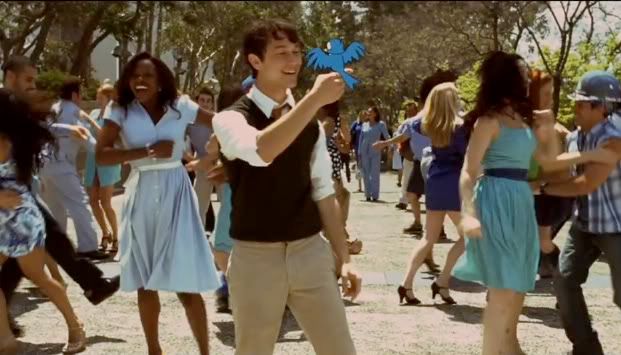
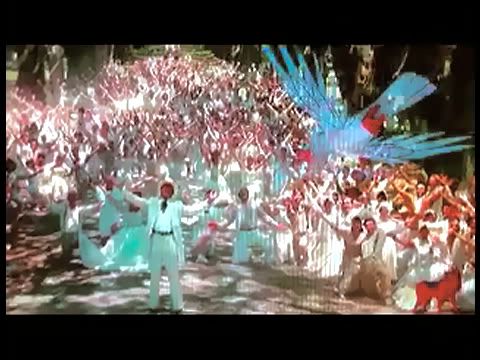
Woody Allen - nay, Nora Ephron (replete with five or eight music video montages) - by way of Tarantino (minus violence) and Kevin Smith (minus porntalk and gratuitous cameos), this is another film geek pastiche, every scene lifted from some other pop movie (seconds into You Make My Dreams Come True sequence, I was thinking Fletch Lives, and two minutes later, the cartoon birdie appeared), with the kind of clever, precious dialogue (same writers wrote Pink Panther 2) wherein a ten year-old references Freud and everyone references pop culture.
There's also a narrator.
For yuppies too young to remember Rushmore, let alone The Graduate.