Showing posts with label hollywood. Show all posts

Wednesday, April 8, 2015

Bleak Beauty

 
Note: click on highlighted words for the expansive experience.
 
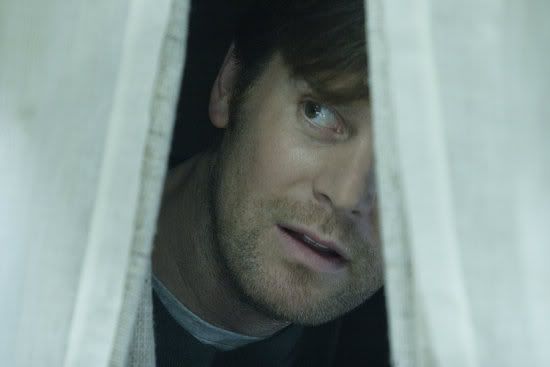
The first mainstream American film to fire bullet holes through the fabled myth of Giuliani's 'cleaned-up, crime-less New York' (spanning '95 to 9/11), Scott Frank's A Walk Among the Tombstones is also a bona fide spellbinder.

Neeson is Scudder is The City - tall, gaunt, scarred but still dignified, lumbering forward amongst taller, oft-dilapidated buildings (the titular tombstones), many of which will soon fall.

Indeed, the picture's pre-millennium-set policier-cum-noir-cum-horror-film surface is scale compared to broader insinuations of a world populace in perpetual peril from the most unspeakable evil (in the form of 'random' violence).

Like the seminal, subversive homegrown films of the Vietnam era (Night of the Living Dead, Last House On the Left), it starkly suggests we are never safe, anywhere, at any time, gentrification or no.

Here hope lies in a refugee's stolen moments of grace - the sound of rain on the rooftop of an empty library at night, a decent diner meal, an AA fellowship meeting, a purposeful case solved.

Or a good movie.


Surveying the sickness.
  

 Little Red Riding Hood.


 Watery graveyard, mirroring one of our endless female victim's'. 


Sunday, May 12, 2013

Scrub

Note: click on highlighted words for more info.


Beantown back in the day, groups of moneyed white kids of college age would stand on sidewalks in places like Harvard Square, beg passerby for change 'for a new Maserati' or 'for bullets, so I can kill myself, cuz I'm depressed'. I could only surmise this was a new and strange form of performance art which both baffled and infuriated me at the time (being an embryonic PR straight out Da Bronx), and I said to a particularly aggressive and insouciant gang once, 'You should try that in Harlem, see how long you last'. Those 'kids', no doubt, are lawyers, politicians (redundant?), corporate execs now. And perhaps ex-TV actors turned film auteurs.

By all accounts (which include techie folks I've both overheard and spoken to directly), Zach Braff is a mensch. To this eye, he was thoughtful writer/performer, bona fide blue blood celeb 'for the people', jokester, fellow OCD sufferer. But he obviously didn't, doesn't, and probably never will realize the implications of this offense.

It belied a lack of commitment, imagination, artistic character, appreciation for his clearly devoted fans, respect for his filmmaking peers. 

I've artist friends literally sell their bodies - on streets and in labs - to fund projects. Mr. Braff believed in his piece so much, he should've invested his Oz the Great and Powerful paycheck, mortgaged one of his homes, sold his share of a bar, called in favors to close friends, colleagues, associates (which include Natalie Portman, Heather Graham and Mandy Moore), perhaps pooled Scrubs residuals with bff Faison.

Mr. Braff doesn't strike me as a greedy, manipulative dude, just a lazy, ignorant one - a Capitalist believes himself an Artist. 

The argument that his fleece possibly brought attention to and promoted crowd funding sites is irrelevant - the average Joe will not donate dough towards a New York street story or a doc on human trafficking, but to her or his favourite TV and/or movie star or glamorous famous-for-being-famous celeb (same way over four million people voted Schwarzenegger in as Governor of California a decade ago - an unprecedented electoral landslide). 

It's not about us commoners thinking Mr. Braff was able to reach into his L.L. Beans and pull out two mil (though he had no qualms about paying at least that to procure and remodel a 'legendary' second home for himself and supermodel Taylor Bagley in New York City - see here). Or his disregard for those starving, hungry artists lack both his monetary means and inside connections. But the possible ripple effect of this kind of white collar panhandling. Crowd funding sites jacking up their percentage fees and/or nixing 'little' projects based on the popularity of those involved (via social media data mining). Tween millionaires Kickstarting stars on Hollywood Boulevard. Brian Grazer on RocketHub for Ron Howard's latest. Spielberg on Indiegogo for Indiana Jones 5 (6?). 

For the record, I am not envious of Zach Braff (I'm a far bolder writer, director, and performer, for one). Speaking personally, however, this is indeed incomprehensible. For moi, the work is everything. I live in a bunker two steps below hovel. I have no things, other than some boxes of DVDs. But unlike Mr. Braff, I did not grow up with things. Again, for me, the work is THE thing. I've sold blood and cum and aforementioned DVDs to facilitate the work - short films, Off Broadway readings, photography equipment, time, space. However, our experiences and how we relate to the work isn't what this is about. With perspective: this was a smooth sell robbery, a Wall Street trader asking a blind man in a wheelchair for cash from his can to procure a caramel macchiato. 

And ultimately, it was a wholly unnecessary act - with powerhouse producers Stacey Sher and Michael Shamberg (Pulp Fiction, Django Unchained, Erin Brockovich, Get Shorty) in tow, it would've taken decidedly less than the three days it took on Kickstarter to make his two-plus mil.

That said, he did not hold guns to 'investor' heads. We are all enablers of the celebrity mindset and culture. 

Alas, the facts are moot. As is my meager opinion. The world turns. The film will be made. It will garner acclaim. Investors will be pleased. Zachary Braff will reign supreme. And if not, well, he'll bounce back.

I wish him only continued success.  


Zach Braff is a Genius. 


Zach Braff is a Winner. 


Zach Braff is just like us. 


Zach Braff is Badass. 


Thursday, April 4, 2013

Gene, You Ignorant Slut...


Note: click on highlighted words for more info.


SiskelEbert was my lifeline as a kid. And, on occasion, as an adult (via YouTube). Few 'celebrity' passings affected me as deeply as Gene Siskel's. Until now. 

Roger Ebert's intelligence, wit and humanity will be sorely missed. 

The balcony is closed, and the aisle seats are now yours to argue in (with both vitriol and affection) for all time. 


Siskel and Ebert and The Movies and The Asshole. (@2:20)


An unfortunate aberration... (see also: 
https://www.facebook.com/RogerEbert/posts/484053061607698)


Bette Midler and James Caan as lizards. (Part 2 here)


Tuesday, August 21, 2012

Scott Free


Note: click on highlighted words for more info.


Pretty pictures betray brutality. Orchestrated chaos cut to Hans Zimmer. Bruckheimer bombast. Alumni include Michael Bay, Dominic Sena, Joel Schumacher – the bastard sons of Peckinpah writ capitalist. Ridley’s brother was there first – he laid template in the coke/booze/sex Don Simpson days. Excess, testosterone-infused. ADD editing. Pounding synth score. Carnage composed, gorgeously shot – angles, lenses, smoke, light.

But what Tony had that Michael missed is conscience. Current climate of superheroes, Mr. Scott still dealt in antiheroes. Flawed masculinity (The Last Boy Scout’s Joe Hallenbeck is John McClane's id, the median between John Wayne and Snake Plissken). He was as much a chronicler of the contemporary (usually American, supposedly hetero) male psyche as Scorsese, Schrader, Eastwood, or juniors PT Anderson and James Gray.

Also seldom mentioned with regard to the cinema of Mr. Scott is emotion – rage, ecstasy, grief, melancholy, regret, desire. Characters in his films love furiously, obsessively – from the ostensibly redemptive love of Creasy for Pita in Man on Fire to the fatally fanatic love of Gil for The Game in The Fan (@:45).

I skipped Top Gun (to this day), but mainlined Beverly Hills Cop II more times than a tadpole should.

The Hunger, too, bit me – Bowie, Bauhaus, New York City when it was New York Fuckin City, Ann Fuckin Magnuson, ‘Little Suzy’ Sarandon (bi alternapunk doc) bumping into ‘Little Willy’ Dafoe at that telephone booth (a decade prior to co-starring in Paul Schrader’s transformative, likewise New York-set Light Sleeper).

The Last Boy Scout and Enemy of the State had sharp, subversive scripts (by Shane Black and David Marconi, respectively), and remain underrated gems. The former – thoughtlessly maligned upon its Christmas '91 release – is still the last word on The Obsolete Hero (‘D-Fens’ should have seen the film before going on his rampage in Schumacher’s Falling Down). The latter, flippantly dismissed as ‘empty’ and ‘implausible’ action fodder fourteen years ago, slyly had our besieged heroes (including Gene Hackman, riffing on his own Harry Caul antihero from Coppola's The Conversation) ultimately playing the U.S. government against itself - and the Mafia (the final shootout sequence between these two agencies as bravura as these things come) - in the name of liberty. Both films had their cake and ate it, too.

The Fan was uncomfortably accurate, and True Romance – well, it’s been awhile.

Mr. Bay = soulless product. Mr. Scott = deceptively substantive cinematic powder kegs. Smart. Exuberant. Taken for granted. Not subtle - but then explosions of emotion never are.

No more Tony Scott, no more Tony Scott Movies ©. Alas, the work endures. Burgeons, even. He saw to that. 

Rest in chaos, Mr. Scott. 


Monday, July 26, 2010

Chameleon Street: 'I think, therefore I scam'


Wendell B. Harris, Jr.'s Chameleon Street is one of The Great Films of the last twenty-five years, and in my top ten. Hilarious, harrowing, exhilarating, relevant, and a crowd-pleaser besides, I saw it for the first time at American Museum of the Moving Image in 1992 and the sold-out audience laughed and cringed and oohed and gave a standing ovation soon as end credits began, afterwards engaging in conversation with strangers sitting beside and behind them.

No films get me to a public movie theater these years, but this one did. A July 6th screening at BAM in Brooklyn, NY was followed by a discussion with Harris and Armond White. Shot on fly with trusty, versatile hand-me-down police brutality capturer, so please excuse shoddy quality - did my best to punch up/down picture/audio.


These also uploaded to youtube, for those sans Flash:


Also check out...
Wendell B. Harris on Spielberg's Catch Me If You Can, the term 'post-racial', and the history of Chameleon Street (also, the comment by that young woman in the audience is particularly relevant to this venue of blogspot, as well as facebook, and what we all do on these sites):
"If you are in any way empowering the masses, giving the masses more tools, then you are circumscribed."
- WBH


Clips from the film...


Other links:


Wednesday, June 3, 2009

From Assault on Precincts To Wind Chills


'Capsule' reviews from defunct mag...

Assault On Precinct 13 (2005, Jean-Francois Richet) - Remake of John Carpenter's original riff on Rio Bravo, random violence, and siege in small spaces.
Promising pre-title sequence plunges into predictable after the legend, "8 Months Later" - this one's gore and gadgets, color-corrected and chopped to death, full of empty homages (Richet another young movie-obsessed director has none of his own ideas) and CGI.
Again chilling allegory is turned into subtext-free genre picture - there are stock explanations for everything happens here, ultraviolence wrapped in a forgettable Hollywood action flick for the ADD masses. And Carpenter never needed all that bloody exposition to stick a knife in your gut.
What is, though, is: a mother of a cast, top to very bottom, doing fairly solid work with a paint-by-numbers script.
All that technology and we can't make a scary movie.


Cloverfield (2008, Matt Reeves) – Monster runs amok in NYC, caught on shaky DV yuppiecam.
Producer J.J. Abrams perhaps views his self as modern cinematic Jules Verne or H.G. Wells – visionary old-school storyteller with new technology at his disposal. To me, he is equivalent to David Copperfield, Vegas lounge act with multimillion dollar backing – all opportunist showman. As such, kudos.
Twenty-two minutes into Cloverfield, palms started sweating and I hoped those involved in its making would eventually go to hell; shortly thereafter, felt myself begin to dissociate, that 9/11 PTSD kicking in. Only way to finish was to mentally CGI what I was viewing into metaphor for what hipster yuppies have done to my city (i.e., destruction).
As spectacle solely – or another clever but ultimately capitalist-cynical celluloid stunt (certainly, it is some kind of technical feat) – it works, ID4 Pt. 2 by way of Blair Witch. Those looking for thoughtful and resonant, seek 1989’s Miracle Mile, with Anthony Edwards and Mare Winningham.
Sound and fury, you know the rest – it would all be so pointless if it weren’t so depressing.

Civic Duty (2006, Jeff Renfroe) – Man thinks next door neighbor’s a terrorist.
Claustrophobic, almost unbearably discomforting little thriller, the rare American film feels provocative, not exploitative, and remains unpredictable till its final moments.
Reminiscent of both Falling Down (“sociocritique” with unhinged protagonist at center) and Clean, Shaven (remaining wholly subjective – we experience events entirely through central character’s possibly skewered perspective – a feat even Taxi Driver doesn’t follow through on).
Perfect performances.

Photobucket


Die Hard 2: Die Harder (1990, Renny Harlin) - Ex-New York City cop uncovers terrorist plot at Dulles on snowy Christmas Eve.
Cynical, forgettable Big Hollywood Summer Action Movie©, sound and fury signifying lots of dough for all involved.
A rushed affair - threadbare script (the first film's was sharp), stunt and mannequin doubles worse than mid-80s grade-Z Golan-Globus fodder, and Our Hero is no longer reluctant, but Rambo relentless. Missing, too, is claustrophobia, and the wife subplot is superfluous and anticlimactic.
But John McClane is ever appealing, as are a solid company of character actors and the usual sure-as-shit Silver score by Michael Kamen.
Mainstream and tired where the original was fresh and anarchistic, if anything, Die Harder points out how on the money Die Hard With A Vengeance would be.
Directed by Renny Harlin, who did a far superior job on Adventures of Ford Fairlane, principal photography of which wrapped days before this one's began and the fatigue shows.


The Fast and the Furious: Tokyo Drift (2006, Justin Lin) – American teen in Japan gets sucked into Yakuza and underground car racing.
Breezy, cheesy, somehow benignly sexist, FATF:TD is less 50’s American International Pictures knockoff than hybrid 40’s B-gangster programmer and The Karate Kid, with direct references to latter.
Amidst low-note genre motifs (nay, constraints – including ubiquitous flash-blink CGI throwaways) are a handful of intoxicating cinematic passages.


Halloween (2007, Rob Zombie) – Remake of John Carpenter’s original slasher.
In the 1970s, we had first generation American film school auteurs of varied ethnic backgrounds, just coming out of Vietnam’s shadow, raised on Godard, Hawks and 60s counterculture. What we have now are fanboys (along with the usual capitalist Michael Bays), suburban-raised on Spielberg, Hughes, Porky’s and so-called “trash cinema” (see Eli Roth, Brett Rattner, Quentin Tarantino).
Despite truckloads of graphic violence, these films are stripped of subversiveness, politics, originality – there is NO THING beneath their glossy MTV/Bruckheimer photography and editing (three seconds a shot, max), film geek in-jokes and kitschy cameos galore (those in Rob Zombie’s Halloween include Sybil Danning, Brad Dourif, Henry: Portrait of a Serial Killer’s Tom Towles, The Hills Have Eyes/The Howling/E.T.’s Dee Wallace, The Monkeys’ Mickey Dolenz, the ubiquitous Udo Kier, the list goes on – and on and on – Zombie is indeed a hardcore horror Kevin Smith).
It’s all very cute, but, as Seinfeld's Elaine said of The English Patient’s bathtub sex scene, “Gimme something I can use,” followed by, “It doesn’t even work.”
As expensive home movie riff on Henry: Portrait of a Serial Killer, it moves at a clip and works. As revision of John Carpenter’s classic, it’s the usual offense.
Here, Mr. Zombie makes the existential/metaphysical into the sociological. In Carpenter and Debra Hill’s original, Michael Myers came from a nuclear family (made literally nuclear in Wes Craven’s The Hills Have Eyes), his evil a chilling anomaly. By injecting “reality” into the myth, he not only misses the point and dulls its power, but points out its own ridiculous inconsistencies (would such white trash folk be literally caught dead in such an upper middle class suburb?).
Of all of the original series’s plot points kept, he keeps the worst – that of Laurie Strode being Michael Myers’s sister, a supposedly revelatory conceit (dropped into Halloween II) Carpenter his self has since attributed to alcohol and arrogance.
Nothing here is match for Dean Cundey’s bleak and gorgeous Panavision photography.
Last half hour works best (Zombie getting Carpenter’s running motif of siege and small spaces). Also, the transformation of Dr. Loomis from idealist to opportunist exploiter is on point, knowingly capturing 60’s hippies’ transformation (descent) into 80’s yuppies.
In fanboy terms, Rob Zombie’s Halloween makes Dominique Othenin-Girard’s Halloween 5 look like John Carpenter’s Halloween.
It’s as graceless and obvious as they come; as such, it’s only a matter of time before it’s called a classic.
Romero, at 68, seems our only revolutionary filmmaker left.

Love Lies Bleeding (2008, Keith Samples) – Young lovers on lam from straight law and crooked Fed.
Like Mickey Dees or the latest Hollywood rom-com, there is equal comfort to be found in the lovers-on-lam-from-law flick (“this thing writes itself”) subgenre of noir.
Marred by two leads too blank to be generic everypeople, made up for by downright refreshing absence of reflexive Tarantino irony (despite having plot of True Romance and that film’s Christian Slater as Bad Fed) or flashy Bruckheimer bombast (tripod point and shoot, no under/overexposure, washed-out colours; genuine orchestral score with only one pop music montage – what would Nora Ephron say? – to Stevie Ray Vaughan and it’s straightforward cinematic, minus MTV quick/cross-cutting).
It hits its notes flatly, but earnestly, and these days, that counts for classic.

Mr. Brooks (2007, Bruce A. Evans) – Diary of a family man/serial killer.
A-list actors doing very bad things.
Smug, superficial, not for one moment believable, it’s nevertheless bloody entertaining until it insults our intelligence two-thirds through.
Not even the slow onscreen death of Dane Cook helps its crass last half hour.
Knockout score by Raman Djawadi.

Photobucket

Until Death (2007, Simon Fellows) – Bad Cop put in coma by Bad Guy recovers to exact revenge.
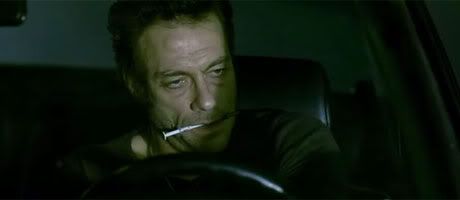
Moody character piece disguised as straight-to-DVD actioner picks up where Bad Lieutenant left off, realistically redeeming our anti-hero in a poetic second act (the most thoughtful portrait of a recovered coma patient’s process back to life I’ve seen – Jean Claude Van Damme plays it like Frankenstein come back to atone for past sins) before returning him to pulp grandeur avenger for its last.
Weak script offset by strong central performance (aforementioned Van Damme perhaps playing variation of his former volatile self), muscular score (Mark Sayfritz) and a director understands character and composition (Simon Fellows’ obvious model is Woo).
Weakest link is Steven Rea (his half-day’s work of four or five slapdash scenes spread throughout), badly channeling Woods in a throwaway Henriksen part.
Startlingly effective when not laughably pretentious, this is the stuff of noir.
Note: This type straight-to-DVD fare bottom rung – shot cheap and fast in Bucharist or Bulgaria, utilizing stock footage, bad dubbing, both voice and body doubles sound and look nothing like their stars, the likes of Wesley Snipes and Steven Seagal, pimping former reps to loyal armchair tough guys clamoring for ye old-school (pre-CGI) action flick, fans dutifully, desperately hanging on the same way urban intellectuals do with every bi-yearly Woody Allen release.
Nice to see filmmakers bothering to lift creative finger.

Photobucket

Urban Justice (2007, Don E. FauntLeRoy) – Steven Seagal searches for son’s killers.
Immensely enjoyable lunatic pleasure us stunted Seagal fans have been waiting on since Exit Wounds.
Always the sociopathic, narcissistic, anarchistic anti-hero at heart, here he finally grows into that role, playing the part with considerable aplomb (we even get a teary monologue, mirroring the one in 1991’s Out For Justice, that Seagal archetype eulogizing his dad, this one his boy), and no body or voice doubles.
Exploitation at its purest (blacksploitation in reverse, actually), which is to say more admirable than anything Eli Roth or Michael Haneke has released this year.

We Own the Night (2007, James Gray) – Family of cops take down Russian gangsters and themselves, circa 1989 NYC.
James Gray is a real Filmmaker, chronicling working class Brooklyn and yes, Queens, New York since 1995’s Little Odessa, turning socio-dramedy of writer Heywood Gould into mythic existentialism of Dostoevsky, via celluloid.
It’s possible no other American filmmaker has made noir this real, personal, urgent – including Michael Mann.
Sleek, haunting, powerful, with at least three bravura sequences (best involving Phoenix’s visit to a coke-cutting/packaging tenement house). All despite semi-“presence” of Mark Wahlberg (whose brother is better), weak next to the electrifying Joaquin Phoenix and Robert Duval (similarly one of the problems with 1997’s The Corruptor, in which he was paired with a volatile Chow Yun-Fat). Of course, this and his comparatively short screen time allow Joaquin to light it up, which he does considerably, naturally.
Whether its rhythms and themes are relevant/resonant or laughable to MTV/Bruckheimer-bred generations is questionable, but I appreciate the (near-obsessive) dedication, the polar opposite of slipshod.

Wind Chill (2007, Gregory Jacobs) – College students stranded on isolated, snowbound backroad encounter ghosts.
Like Vacancy, Wind Chill is Open Water done right – elegant, simple, old fashioned (despite presence of cell phones and CGI).
Director Jacobs understands Carpenter’s motif of siege in small spaces and using Panavision to its full extent in driving that dread home (utilize the whole screen and don’t insult your audience) – though, unlike Carpenter, there is no subtext.
Spot on casting and performances.