Showing posts with label new york. Show all posts

Wednesday, April 8, 2015

Bleak Beauty

 
Note: click on highlighted words for the expansive experience.
 
The first mainstream American film to fire bullet holes through the fabled myth of Giuliani's 'cleaned-up, crime-less New York' (spanning '95 to 9/11), Scott Frank's A Walk Among the Tombstones is also a bona fide spellbinder.

Neeson is Scudder is The City - tall, gaunt, scarred but still dignified, lumbering forward amongst taller, oft-dilapidated buildings (the titular tombstones), many of which will soon fall.

Indeed, the picture's pre-millennium-set policier-cum-noir-cum-horror-film surface is scale compared to broader insinuations of a world populace in perpetual peril from the most unspeakable evil (in the form of 'random' violence).

Like the seminal, subversive homegrown films of the Vietnam era (Night of the Living Dead, Last House On the Left), it starkly suggests we are never safe, anywhere, at any time, gentrification or no.

Here hope lies in a refugee's stolen moments of grace - the sound of rain on the rooftop of an empty library at night, a decent diner meal, an AA fellowship meeting, a purposeful case solved.

Or a good movie.


Surveying the sickness.
  

 Little Red Riding Hood.


 Watery graveyard, mirroring one of our endless female victim's'. 


Wednesday, July 6, 2011

'That one with Rebecca DeMornay...'


Excerpt from Let Me Take You Down, an hour-long piece I produced, directed, shot, edited at 17, 
about a young man pays for college by dealing drugs in the ghetto he grew up in. 


We were babies then. We were scarred but didn't know it. I wanted to make change. Or help facilitate it. Wanted to shock, cajole, incite, poke holes in your belief system. Prod you from your comfort zone. Revolution, baby. Don't be a sucker. Film was a means to an end. We don't need no stinking booms or lavs. Fuck the lights. Just gimme that camera with the gray duct tape holding the viewfinder and battery from falling off. The cast sometimes showed up high. I remember being disappointed. Got to be alert trying to stick a knife in The System's gut. A month later, the first beloved face you see in this excerpt would die of an OD. We shot during Christmas season. The blitz. Few years later, I'd see Allen Baron's Blast of Silence and it would make me smile. 
We all came at this as subversive black comedy. I believe it still works on that score. I start watching, I think, how silly. Then find myself engrossed. Which makes me smile again - not for myself, but the babies who made it. Folks have told me: 'raw', 'honest', 'intense'. A photographer friend said she thought it was about 'misplaced anger'. I'll take it. Alas, this was all before sickness and realization. Today, I lack self confidence and means. To the point of needing metaphoric crutches. And: all the folks I know in 'the industry', I don't think there's any I can call up and say, 'Let's start a fuckin revolution. Like, right now'. Tide's changed. But the need - in myself, and The Way We Live - hasn't. 

Notes: Ironically, tragically, we'd lose cast member/tech advisor Rob Spangenberg (my bff at I.S. 145 and my guardian angel) to an overdose a month after shooting. Transferred from 3rd generation VHS (that's http://wikipedia.org/wiki/VHS, kids).
Originally dedicated (in end credits) 'To all the slaves of New York...and all the non-New Yorkers - especially the whiteys', it was shot in 4 days, in Queens (underneath the #7 el and in the James Bland housing projects near Shea Stadium - now Citifield) and all over (and under) Manhattan. If nothing else, it's an accurate portrait of where and how we grew up.
I think we predated Man Bites Dog (U.S. release), which it resembles in spirit, if not quality (I was all about 'natural' sound and light then; I was a lunatic child). Also 'reality TV', which it resembles down to overactive camwork and mix of fact and fiction.
@9:30, my Abuela, on the left.
@5:50, Metropolitan Museum of Art, smuggled shot.
@1:43, my aunt.


Monday, July 26, 2010

Chameleon Street: 'I think, therefore I scam'


Wendell B. Harris, Jr.'s Chameleon Street is one of The Great Films of the last twenty-five years, and in my top ten. Hilarious, harrowing, exhilarating, relevant, and a crowd-pleaser besides, I saw it for the first time at American Museum of the Moving Image in 1992 and the sold-out audience laughed and cringed and oohed and gave a standing ovation soon as end credits began, afterwards engaging in conversation with strangers sitting beside and behind them.

No films get me to a public movie theater these years, but this one did. A July 6th screening at BAM in Brooklyn, NY was followed by a discussion with Harris and Armond White. Shot on fly with trusty, versatile hand-me-down police brutality capturer, so please excuse shoddy quality - did my best to punch up/down picture/audio.


These also uploaded to youtube, for those sans Flash:


Also check out...
Wendell B. Harris on Spielberg's Catch Me If You Can, the term 'post-racial', and the history of Chameleon Street (also, the comment by that young woman in the audience is particularly relevant to this venue of blogspot, as well as facebook, and what we all do on these sites):
"If you are in any way empowering the masses, giving the masses more tools, then you are circumscribed."
- WBH


Clips from the film...


Other links:


Friday, July 10, 2009

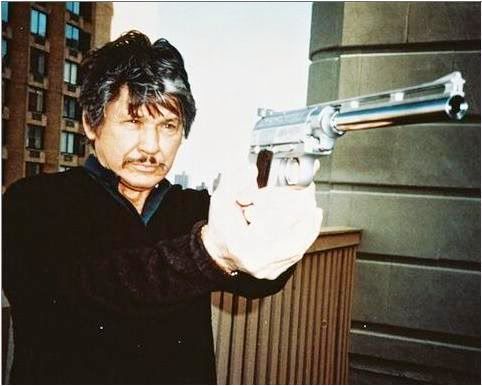
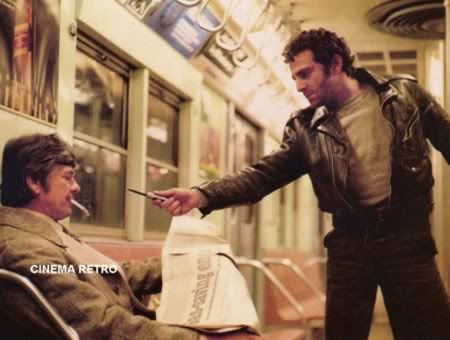
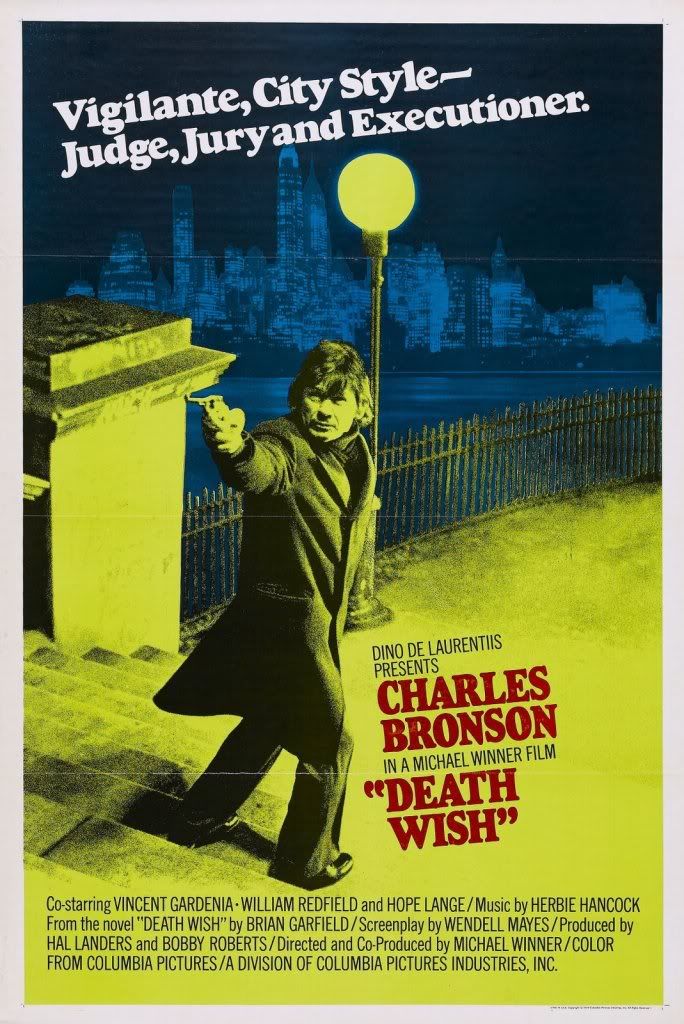
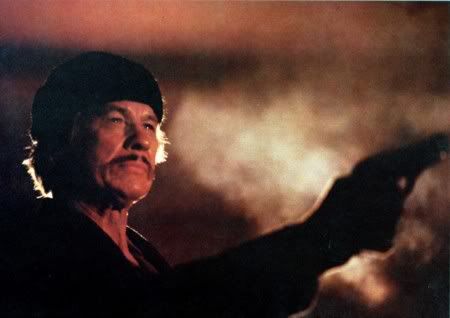
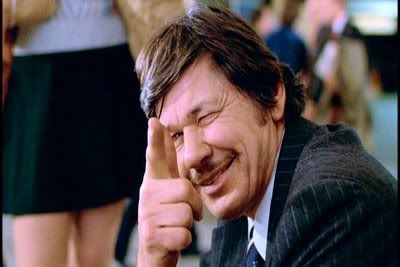
Exterminate With Extreme Dispassion: Death Wish To Death Wish 3


“We got hell here,” old man Balsam says to old man Bronson, returning home the prodigal son to New York City and he ain’t kidding: these ravaged streets look like the badlands of Deadwood, the bombed-out edifices of war-torn Iraq, or Brooklyn’s Nostrand Ave. Rampant violence in open daylight and cops of Keystone variety just drive by. Multiracial gangs dressed like Little Rascals, led by Nosferatu with a backward Mohawk – barber misunderstanding the guy and I’m sure he was killed shortly thereafter. Extortion at will, an elderly thug picking at plaque with the barrel of a .357 and everyone listens to Jimmy Page. This the milieu and here we go – our hero, once Conscientious Objector, now bold Black Angel of Death arriving just in time.
Bronson: “What about the cops, they do anything?”
Rodriguez, nice Rican neighbor (given last name only, presumably out of respect for the character’s Latino heritage): “Yeah - they enforce the parking laws.”
Nefarious miscreants bust into respectable senior citizens’ homes through the fire escape at any given time of day – ex-architect Bronson fortifies apartments in much the same way young Kevin will the family house in Home Alone:
Balsam: “What’re you doing?”
Bronson: “Thinning the herd.”

Photobucket

All culminating in a full-scale uprising bearing startling resemblance to the L.A. riots – brutal beating of a Caucasian male passerby, stoning of police vehicles, looting, pillaging, buildings on fire, flames eight-stories high.
I remember thinking these films cheap, cheesy and crude initially. It was only after reading Brian Garfield’s original Death Wish novel (which had its own, more thoughtful literary sequel, entitled Death Sentence) some years ago that I observed the first.

Photobucket

One of the best American films of the 70s, Death Wish belongs with Taxi Driver, The Exterminator, and Bad Lieutenant as mad, sad, urban feverdreams, sharing a same sensibility, one both distinctly New York (paranoia, sense of irony, knowledge of neighborhoods, subway lines, history and general way of city life) and male. Anti-hero myths, “Movie” movies masquerading as social commentary (unlike, say Norma Rae or Serpico).
It can further be categorized, along with Electra Glide in Blue and Easy Rider, as time capsule for The Way We Live Now and Why (the recent Crash seemed to want to be in this family).
Acting (here, Bronson – less an actor than a presence – attempted a performance, his character subtle and nuanced; it was something like Clint in Unforgiven, coming at it with all that tough guy, man-of-action baggage and flipping it, making it mortal), score (one-time Miles Davis protege Herbie Hancock), direction (Brit Michael Winner would go on to pimp the next two sequels, but here his work was sound; moody, unflinching, satiric when necessary – a handsome shot of a clean, sunny New York and the camera zooms out to reveal it’s a postcard, the picture-perfect tourist façade portrait sitting there in the midst of the cesspool that is the real one), script and locations conjoined to form a solid, satisfying slab of concrete.
Plus that killer parting shot, rivaling another ‘70’s New York classic, The Taking of Pelham 1-2-3.
Bronson’s grief here was palpable – though not as much as in the book, there sad to the point of unbearable – and we watch a process occur, an arc to our unstrung hero; gradual escalating real-world behaviour (his first weapon is pitifully makeshift – a sock full of quarters; after the first killing, Bronson scurries home to his bathroom and hurls), change that made sense. We could relate and so were involved emotionally in it and not just observing. Presenting a moral conundrum, as we invariably, vicariously experienced the thrill of baiting, then offing convincing street punks (like Welcome Back, Kotter’s Washington) in real-world settings (Washington’s scene in Central Park, the film shot entirely on location in New York City, with a brief but crucial jaunt to Arizona).
The violence here hurts – Bronson gets cut (his first war wound) and winces, breathing irregularly while tending in real-time to his injury, and that hard and tragic and funny irony is there – this civilized, mild-mannered businessman nursing a stab wound the mugger he murdered gave him just before dying.

Photobucket

Released during our Nixon/Ford era, the film caused a stir, inspiring outrage and debate. Not so for its children, however; Death Wish II, released during Reagan’s first term, was trashed and any subsequent additions ignored, diminishing any respectability toward the original.
Part two indeed utterly reprehensible, but in a nihilistic enough way to have invited my affection – those scenes of him hunting, dressed in black, knit hat pulled down to his brow, beady eyes scanning dark shadows; steady tracking shots through the crime-ridden, seriously rat-infested underbelly of downtown L.A. at night, scored to Jimmy Page and Gospel hymns emanating from ghetto storefront churches next door to liquor stores and hock shops; a decade since my last viewing and I remember these details.
You want violence and urban decay, we got both like a muh fucka and, to be sure, this one basks in it confidently, tactlessly, unapologetically, almost gleefully, and there’s something to be said for that. No character development, only brief setup and payoff, all gratuitous and not just a little akin to a slasher film, only grittier and more mean-spirited.

Photobucket

By Death Wish 3, we’ve an invincible automaton, downright psychopathic, dispatching vengeance in a clinical manner with nary a quip – not Bronson’s style, baby. Exterminate with extreme dispassion.
No conflict or complexities here, the message simple: early on, a shot of a cockroach scurrying across the floor, the corrupt police lieutenant on whose side we’re supposed to be stomping it with his shoe and saying, “Cockroaches – I hate em.”
Later, he’ll smash one against the wall with bare fingers and ask Bronson to cool it for a few – too much heat comin down, y’see – which Bronson will refuse, saying, “It’s like killing roaches – you have to kill em all, otherwise, what’s the point?”
Bronson now a vigilante by profession, blackmail-hired by aforementioned police lieutenant to “take out the trash” his men cannot. Tools of trade including a Wildey Magnum (“a shorter version of the African big game cartridge” – bullets the size of your middle finger) and a couple heavy-duty vintage machine guns need two strong arms to hold. Plus a missile launcher.
One long commercial for the NRA, by the film’s climax, all formerly terrorized residents will have procured guns – some pried from the clutching hands of dying thugs they themselves have killed – and used them without trepidation, running rampant through rioting streets, shooting indiscriminately at minority youths, ostensibly taking back the night.
Fire with fire – “Exterminate all the brutes.” (Joseph Conrad, Heart of Darkness)
Page’s nervy, wall-to-wall score (lifted from part two) lending the only edge to a cynical venture.
Yet, there is also something to be said for cold simplicity. Produced today, you can be sure them three seconds it takes Bronson to load would be drummed into its own action sequence – two-thousand cuts deep, shot from every angle and with a glossy sheen so beautiful you’d want to eat or fuck it. Each punk shot receiving his own thunderous movement, jacked up camera in constant motion, low-angle tracking shots, triple-extreme hand-held close-ups cascading into a climax with said punk’s towering body and Bronson’s ejected cartridge intercut as they descend to the ground, bouncing twice before lying still, crashing music score quelled to silence, followed quickly by a throwaway quip, bring us all back from melodrama.
Bruckheimer bombast, sound and fury signifying Peckinpah spitting out his cigar and rolling in his grave.
All the carnage occurs here, it’s the women who suffer most; Rodriguez’ wife, for example, despite having zero lines, will be kidnapped, beaten, gang-raped and murdered, making it personal for our once cheery, now devastated token Rican (who weeps in his sombreros-ridden apartment – no joke). Females are victims only, occasionally used as pawn – you’re a hoodlum and an old guy threatens your rep, your very manhood, you rape his lady, maybe punch her in the face, blow up his car while she’s passed out in it.
Us men have a bloodlust and an insecurity that cannot be denied and without them traits, these men – Bronson, Eastwood, Norris, Seagal, Joel Silver – would not have had careers.
Thus the message of Death Wish 3 (“Screw complicated Roman numerals,” said marketing) is simpler, even more Republican-American than “an eye for an eye”/ stomp all minorities and liberals. Said message: I am here to make money, and exploiting your basest fears and fantasies is how I’ll do it.
At one point, Bronson chidingly asks fellow Korean war vet Balsam, “This is America, isn’t it?” while concealing the massive Magnum behind his back.
Balsam’s look is troubled, but in case there be cast doubt, the American flag hung (droopily) in the corner of Bronson’s bunker confirms it.

(To be filed under Meaningless Trivia is the Goldblum-Fishburne connection: Jeff in number one, ruffian leader knocks Bronson’s wife out, then supposedly "paints" his daughter’s face, leading her to catatonia; Larry/Lawrence in number two, wiry follower likes to fiddle with a hunter’s knife, joins in gang-raping Bronson’s Mexicana maid, murdering her afterwards, then kidnapping his still-catatonic daughter, gang-raping her as well, and yes, killing her dead in the afterglow. Auspicious beginnings.
They would later unite for Bill Duke’s smart, half-blazing, half-familiar Deep Cover [co-written by novelist Michael Tolkin], which would contain career performances from both and whose score would be snarkily built around direct samples of Page’s fuzzy, frenzied, lunatic riffs from number two. And everything comes full circle.)

- from May of 2005

Photobucket


Monday, June 22, 2009

Waiting For Jesus In The Shadow Of Kong

From 'Kong Week' at Access Hollywood. (Note: "K" = girlfriend, at that time staying in Kentucky)


12.5.05

L.A. people, supremely silly. They wear pink booties like puppies and – ever the optimists – sunglasses in the rain.
In town for Kong Week, of which we are in the eighth day.
8,000 people will see the over three hour product at 42nd and 8th tonight. Were I a terrorist, this’d be the bullseye.
George Lucas will be there. The Governor. The entire NBC family, also owned by Universal. The Queer Eye guys. Jesus may show. It will snow.
Right now, Pier 92 – location for premiere party. 420-500 feet – three football fields. Four man crew, shooting useless footage – Universal wants us to interview caterers, we do it. Cogs in the machine are we.
Skull Island recreated. Vines hang from ceiling. Waterfalls in dark corners. Trees flown in from Whofuck, Knows. Wade through jungle to get to tables.
“All this money,” Sound Guy says in my direction, shaking his head.
3,000 people will eat here tonight. 850 pounds of beef sirloin, swallowed with vodka flown in from New Zealand.
I’d rather be in Kentucky.
Past the jungle, 1930s New York Chinatown and Little Italy. Fake storefronts and the most remarkable fake snow – it’s cold! it’s wet! it’s malleable! And no doubt toxic.
I eat some.
Leopard-skin benches, chairs, tables. The Empire State Building in the corner.
Pale, lithe dancers (Rockettes) move choreography on a black stage beneath beaming ‘Burlesque’ sign.
Screens in each corner will project M and A Farewell to Arms.
Past these mean streets is Morocco, circa 1932. Zebra slipcovers. El Morocco Club re-erected, replete with black and white dance floor.
Where you are in the field is what you eat. "Pasta in Little Italy, fried dog in Morocco, human feces on Skull Island."
L.A. women in 1980s shoulder pads whisk back and forth, thinking they run the show. Mafioso-looking muh fuckas mill about, commenting nefariously on said women and the surrounding décor.
Latino brethren sweep the floors and push massive dumpsters. Told to “Shhh!” while we shoot, they take the opportunity to wipe their sweaty faces with filth-stained white shirts.
I watch the hands of interviewees. They shake nervously. Any sign of humanity I look for and cling to these days.
Big, round college cafeteria tables with names like Brody, Black and Kidman printed on laminated off-white cards sit atop them uncomfortably.
Kong has his own table.
As does Peter Jackson, blazing, unconventional writer, director, editor, actor, make-up artist, puppeteer. His wife is his partner, having written and produced. It reminds me of K and what could’ve been.
Craven caterers and pointless publicity people – everybody wants a shot on camera and we’re behind schedule.
I don’t care; I have strep throat.
Next is Today Show Christmas/Tenth Anniversary party. Am containing my exultations lest I be fired.

42nd Street E Walk, AMC closed all day. I am in and out of both of them throughout – “He’s legit,” they say when they see me and give me free reign.
In the street, carpenters at work on The Red Mile.
A big deal – bigger than all of us. Universal, even.

Later. Standing out in the freezing fuckin cold, clamoring for alacrity and some decongestant, lest my cough be caught on mic.
Different, Mafioso-looking muh fuckas mill about. One wears a sombrero; he opens limo doors.
Twelve hours after first call, nine hours in numbing cold, they begin matriculating from long, lumbering limos.
Lucas, Aronofsky, other directors no one cares about.
Tim Robbins and his brood. He recognizes me but not from where – a nod in my direction and a fellow PA-Slash-Whatever is impressed. I tell him we go back like car seats, though I met he and Ms. Sarandon only once, at a Women’s Conference.
The Donald doesn’t remember me, but his wife does. By way of recognition, a surreptitious wink. I play it off, turn to look at the guy behind me. Bald and shivering, he has no idea what’s happening.
Tiny Naomi Watts and towering Liev Screiber, the latter on whose first film I worked back when I was an embryo. And I told everyone, this guy’ll be winning Oscars soon. No one believed me but just watch Mixed Nuts or Spring Forward.
Adrien Brody and his bountiful beads. Jack Black. Mr. Jackson. Gollum.
Lindsey Lohan. Go get her, someone faintly familiar says to me. I do, mind stuck somewhere between Grande Egg Nog Latte and K’s sweet, viscous lips on mine. Ms. Lohan’s nips are the first thing I notice - it is, after all, seventeen degrees.
She smiles and “Don’t worry, I’m legit,” I say, though she don’t seem too perturbed at this strange man-boy in his leather jacket gently accosting her.
She’s a baby. And ridiculously lovely, I think, though no match for Sarah, Penny or Allison.
“Where’s your black suit?” she replies and the leemers pounce. Our Billy Bush wins, dragging her crackhead-skinny ass over to the Access corner – the one with the fireplace and hot chocolate.
It occurs to me that getting paid for doing this makes just as much sense as working for free.

All alone again in this lonely city, I am ripe for redemption and this is just the season for it.
Love and satisfying work. Both elusive. Everywhere I look, missed opportunity.
I stand here with no hope for my future. None.
It begins to snow. I blow my nose and wait for Jesus.


Shitty disposable cam shot of O'Dell, Bush and 
Lohan on red carpet for Kong premiere. 
I got a better shot of the dress than 
http://community.livejournal.com/red_carpet/1646.html.


Disposable cam shot. Beginnings of Kong red 
carpet on 42nd and 8th, early December, 2005.
Eighteen hours later, we went home.
See http://www.ny1.com/?SecID=1000&ArID=55435


Disposable cam shot of Robbins, Bush and one of those Kong signs.


Disposable cam shot of Naomi Watts' back 
and Billy 'Slap Me Five' Bush's profile. 
Watts' head covering date Liev Schreiber's, 
her right shoulder covering Nancy O'Dell.